Emily is a musicologist and cultural historian, specialising in twentieth-century Germany and the United States. She is a Visiting Research Fellow at King’s College London, where she held a British Academy Postdoctoral Fellowship from 2020-2024. After completing her doctorate at Oxford University in 2016, she went on to a Marie Curie Global Fellowship at Royal Holloway, University of London, and at Harvard University, USA.
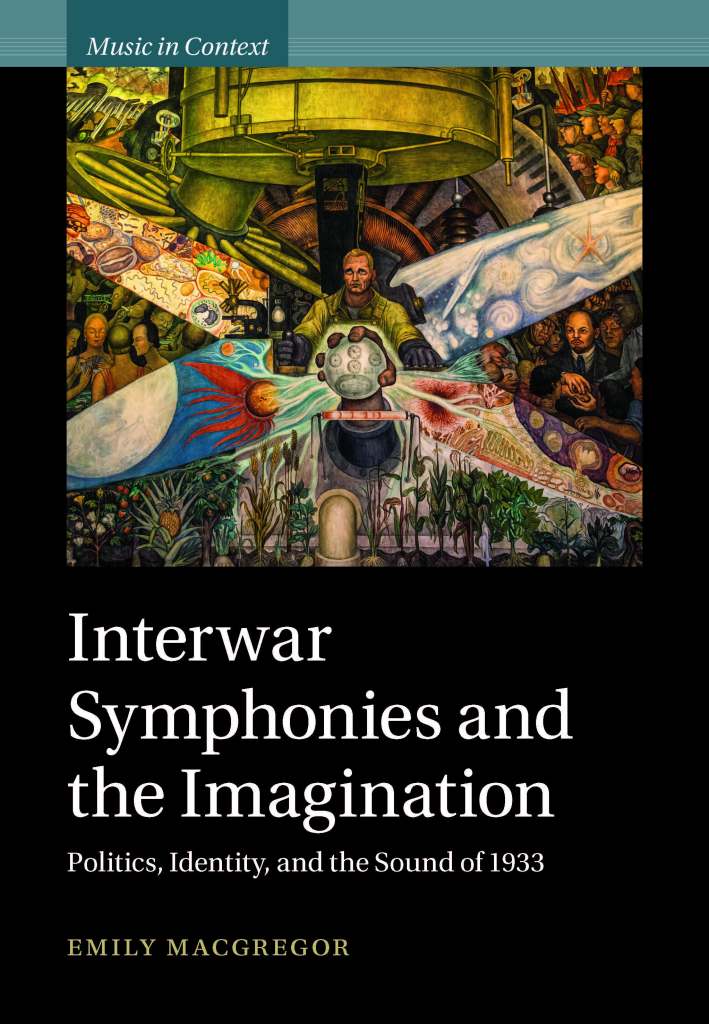
Her broad research interests centre on music and the politics of space and subjectivity. Her book, Interwar Symphonies and the Imagination: Politics, Identity, and the Sound of 1933 (Cambridge University Press, 2023) asks what symphonies from the early 1930s can tell us about how people in Western Europe and North America imagined selfhood during a period of international insecurity and political upheaval, of expansionist and colonial fantasies, scientised racism, and emergent fascism.
In 2019 she was awarded the Royal Musical Association’s Jerome Roche Prize for ‘a distinguished article by a scholar at an early stage of his or her career’.
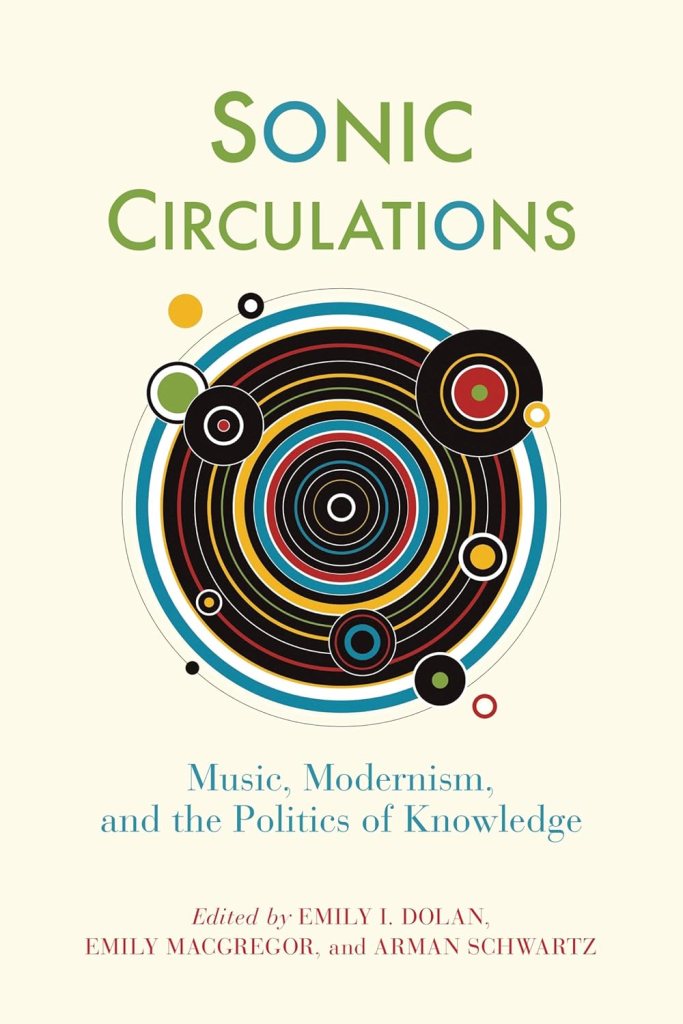
Her latest research, funded by the British Academy, focuses on diasporic musicians and cultural theorists living in New York in the latter half of the 1930s. With Arman Schwartz (University of Notre Dame) and Emily I. Dolan (Brown University), she co-edited a collection of essays titled Sonic Circulations: Music, Modernism, and the Politics of Knowledge (University of Pennsylvania Press, 2025). The volume considers the place of music and sound in the development of sociology, eugenics, instrument building, and other early twentieth-century regimes of knowledge production, searching for new ways of hearing the imperial geographies of modernity.
Emily has taught widely at undergraduate and postgraduate level, and is a Fellow of the Higher Education Academy.
The symphony has long been entangled with ideas of self and value. Though standard historical accounts suggest that composers’ interest in the symphony was almost extinguished in the early 1930s, this book makes plain the genre’s continued cultural dominance, and argues that the symphony can illuminate issues around space/geography, race, and postcolonialism in Germany, France, Mexico, and the United States. Focusing on a number of symphonies composed or premiered in 1933, this book recreates some of the cultural and political landscapes of an uncertain historical moment-a year when Hitler took power in Germany, and the Great Depression reached its peak in the United States. Interwar Symphonies and the Imagination asks what North American and European symphonies from the early 1930s can tell us about how people imagined selfhood during a period of international insecurity and political upheaval, of expansionist and colonial fantasies, scientised racism, and emergent fascism.
REVIEWS
‘richly detailed, deeply informative, and finely written … a valuable addition to the literature both on the symphony as a genre and on twentieth-century music as a whole.’
Matthew Mugmon, Notes: the Quarterly Journal of the Music Library Association
BOOK
Sonic Circulations: Music, Modernism, and the Politics of Knowledge
Derived from the Latin words circum (round) and ire (to go), a circuit can refer to any bounded area. For contemporary readers, it might evoke the course of an electric current, as well as the flow of global capital. Yet sound—an inherently temporal phenomenon—can only circulate in mediated forms. Tracing the pathways through and by which sound traveled in the early twentieth century, Sonic Circulations not only proposes a new account of the role of music, sound, and voice in modern knowledge production but also poses urgent questions about technology and empire, while also foregrounding the tensions and paradoxes involved in situating the sonic within any fixed regime or system.
Exploring key moments in the development of disciplines including linguistics, sociology, and eugenics, as well as musicology itself, Sonic Circulations explores the many ways that sound has functioned as evidence and information, as both an object and an agent of scientific mastery. Contributors explore the processes by which sound has moved through a variety of conceptual, as well as physical domains, highlighting the richness of historical contingency. This volume shows that circulation happened in many spaces and through many technologies: through sound recording, but also through the trade magazine and in the classroom; through wireless broadcasting and international festivals, but also in the cozy spaces of the suburban home.
Publications
Sonic Circulations: Music, Modernism, and the Politics of Knowledge, with Emily I. Dolan and Arman Schwartz (edited volume, University of Pennsylvania Press, 2025).
‘From Berlin to New York: Kurt Weill, the Fantaisie Symphonique, and the Middlebrow’, in The Oxford Handbook on Music and the Middlebrow, eds. Christopher Chowrimootoo and Kate Guthrie (Oxford: Oxford University Press, 2024).
Interwar Symphonies and the Imagination: Politics, Identity, and the Sound of 1933 (Cambridge: Cambridge University Press, 2023).
‘Laura Tunbridge, Singing in the Age of Anxiety: Lieder Performances in New York and London Between the Wars (Chicago: University of Chicago Press, 2018), ISBN 978-0-226-56357-2 (pb)’, Twentieth-Century Music, 2020, 1-6. (Review article)
‘Roy Harris’s Symphony 1933: Biographical Myth-making and Liberal Myth-building in the American West’, Journal of Musicological Research, 38: 3-4 (September 2019), 266-284.
‘Listening for the Intimsphäre: Recovering Berlin 1933 through Hans Pfitzner’s Symphony in C-sharp Minor’. The Musical Quarterly 101 (October 2018), 35-75.
‘Whoever Pays the Piper Calls the Tune: Pressures on Academic Freedom and the Discipline of Music in the UK’, Critical Quarterly 54 (December 2012), 54-73.

 DR EMILY MACGREGOR